






How to Become a Surrogate Mother
Carry an IVF pregnancy with dedicated support. Check age 21–40, BMI under 35, and $55,000–$85,000 first-time base pay before applying.
Meet Hope
Talk it through before you apply.
Ask anything about becoming a surrogate, one thought at a time. If talking is easier, send a voice note. Hope can start there too.

If the composer opens blank
Hi Hope! I'm interested in becoming a surrogate. Can you help me figure out my next steps? (PC7Q2M)

If the composer opens blank
Hi Hope! I'm interested in becoming a surrogate. Can you help me figure out my next steps? (PC7Q2M)
Hi Hope! I'm interested in becoming a surrogate. Can you help me figure out my next steps? (PC7Q2M)
Send it, then type a little at a time, or leave a voice note.
Prefer the website? Start online
Direct answer
How do you become a surrogate mother in the United States?
To become a gestational surrogate, you meet baseline criteria (ages 21–40, BMI under 35, 1 to 5 prior healthy births, max 3 C-sections, living in 1 of 48 eligible states), complete medical and psychological screening, match mutually with intended parents, sign an independent legal contract, complete IVF embryo transfer, and earn $55,000–$85,000 in first-time base pay.
- Gestational surrogate (gestational carrier)
- A woman who carries an IVF pregnancy for intended parents using their or a donor’s egg and sperm, sharing zero DNA with the baby.
- OB/GYN medical clearance
- Review of prior prenatal and delivery records by the intended parents’ reproductive endocrinologist (RE) to confirm safe pregnancy readiness.
Step 0 · Quick baseline check
Quick Self-Check: Do You Meet Baseline Requirements?
Check your age (21–40), live BMI (under 35), prior deliveries (1 to 5 births, up to 3 C-sections), and state eligibility across 48 eligible U.S. states before you spend time on a full application.
2. Live BMI check (cutoff under 35)
You meet the four baseline surrogate checks
Your age, BMI, delivery history, and state align with our initial screening standards. Next, estimate your pay or start the online application for a coordinator review.
- Age21–40 years
Within Patriot Conceptions baseline age guidelines.
- BMI25.0 (under 35)
Within the program BMI standard (under 35).
- Pregnancy history1 to 5 births, 0 to 3 C-sections
Meets baseline prior delivery and C-section limits. Full OB records are reviewed by the fertility clinic.
- State of residenceCalifornia (eligible)
Surrogacy-friendly legal framework. Independent reproductive counsel confirms your state contract and parentage steps before matching.
Based on published baseline criteria; fertility clinics complete final medical clearance. See your state’s legal guide →
Baseline gestational carrier criteria at a glance
| Requirement | Published Standard | Why Clinics & Coordinators Check It |
|---|---|---|
| Age | 21–40 years | Supports safe pregnancy outcomes and aligns with fertility clinic screening thresholds. |
| Body Mass Index (BMI) | Under 35 | Affects IVF medication response, anesthesia safety, and pregnancy risk. Individual clinics may apply stricter limits. |
| Prior live births | 1 to 5 healthy deliveries | Shows how your body carries a full-term pregnancy and confirms you are parenting at least one child of your own. |
| Prior C-sections | Up to 3 maximum | Limits uterine surgical risk. The fertility clinic reviews operative and delivery records before clearance. |
| State of residence | 48 eligible states (excludes Louisiana and Nebraska) | Surrogacy contracts and parentage orders follow state law. Confirm state rules before matching. |
| Health & lifestyle | Smoke-free, nicotine-free, drug-free | Required for carrier and baby safety throughout screening, medications, and pregnancy. |
| Residency & stability | U.S. citizen or permanent resident; financially stable | Candidates must be financially stable without relying on government assistance and have reliable home support. |
End-to-end roadmap
How to Become a Surrogate in 8 Steps
From your first self-check through screening, mutual matching, legal clearance, embryo transfer, and delivery. Total planning time is typically 12 to 18 months including pregnancy, with match pacing driven by shared values, records readiness, and clinic fit.
- Step 01 Day 1Your fit You compare the public requirements with your real life before spending time on a full application. Lead: You
- Step 02 Short online formApply You share basic contact, pregnancy-history, location, and readiness information. A coordinator reviews the submission. Lead: You + coordinator
- Step 03 4 to 6 weeks est.Get ready The team coordinates pregnancy-record review, screening conversations, clinic requirements, and profile preparation. Lead: Coordinator + clinic
- Step 04 Variable by fitMatch You review a possible family, prepare questions, meet, and decide whether you want to continue without pressure. Lead: Mutual decision
- Step 05 Varies by legal reviewClear the plan Insurance is reviewed, independent attorneys work through the agreement, and the payment and reimbursement plan is established. Lead: Independent attorneys
- Step 06 3 to 4 weeks prep est.Transfer The fertility clinic issues the calendar, monitors your response, performs the embryo transfer, and schedules follow-up testing. Lead: Fertility clinic
- Step 07 Weeks 1 to 10 clinic, then your OBPregnancy The clinic confirms early milestones, care transitions to an obstetric provider, and the team prepares for pregnancy and delivery needs. Lead: Your OB/GYN + coordinator
- Step 08 Birth & postpartum recoveryDelivery The hospital plan guides arrival and communication, the intended parents welcome their baby, and postpartum recovery begins. Lead: Hospital team + coordinator
Transparent compensation estimates
What Surrogates Earn
First-time base compensation typically lands around $55,000 to $85,000 before reimbursements, allowances, and qualifying add-ons.
Experienced surrogates can earn total packages up to roughly $120,000 with allowances and add-ons.
When payments arrive (milestone flow)
- 01 Screening & records Expenses covered
- 02 Contract signing $1,000 signing bonus
- 03 Cycle start & transfer $600 med start + $1,000 transfer
- 04 Pregnancy milestones $55,000–$85,000 first-time base
- 05 Delivery & postpartum Final installments + add-ons
Base pay & milestone allowances (estimates)
- First-time surrogate base compensation
- $55,000–$85,000
- Contract signing bonus (At contract signing)
- $1,000
- Monthly miscellaneous allowance
- $300/month
- Medication start fee (When medications start)
- $600
- Embryo transfer fee (At embryo transfer)
- $1,000 per cycle
- Maternity clothing allowance (During pregnancy, per agreement)
- $800+
- Housekeeping allowance (If included in the agreement)
- $400
- Surrogate benefit program (During the journey, per agreement)
- $600 per journey
Special-circumstance & covered benefits
- Multiple pregnancy
- +$7,000
- C-section delivery
- +$3,000
- Mock or dropped cycle
- $500
- Invasive procedures
- $500 to $7,000
- Bed rest
- $250 per week
- Breast milk pumping
- $300 per week
- Medical screening
- Covered
- Independent legal counsel
- Covered
- Life insurance
- $250,000+ term policy
- Travel, lost wages & childcare
- Reimbursed as approved
Dedicated team & companion app
What Support Looks Like Day to Day
Becoming a surrogate works best when every appointment, document, and reimbursement has a clear owner. Patriot Conceptions pairs a dedicated coordinator with our mobile companion app, written escrow terms, and your own OB/GYN after week 10.
- Dedicated coordinator
One point of contact from screening to recovery
Your coordinator tracks OB record requests, clinic calendars, travel bookings, and monthly check-ins so you are never chasing forms alone.
- Companion mobile app
Track tasks, visits, and reminders in one place
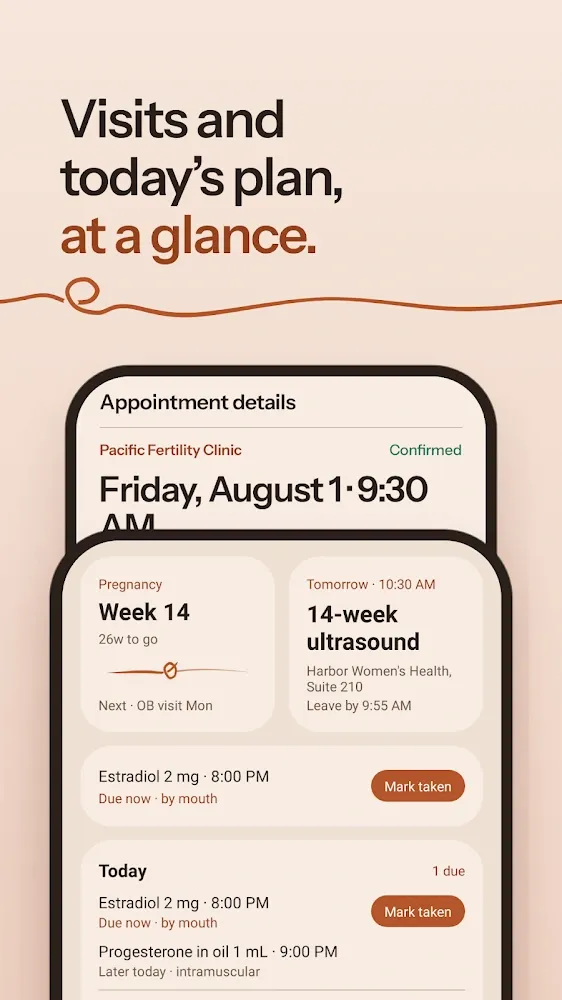
The PC Surrogacy & Egg Donor app (iOS and Android) lets you save your application as you go, review upcoming clinic appointments, and see coordinator updates.
- Escrow-administered payments
Written schedules before medications begin
Base installments, monthly allowances, and approved reimbursements are defined in your legal contract and administered through escrow rather than informal transfers.
- Your own OB/GYN after week 10
Local prenatal care with independent legal counsel
The fertility clinic monitors early pregnancy through about week 10, then you transition to your preferred local OB/GYN. An independent attorney represents only you.
Your visits, reminders, and application in your pocket

From first-time surrogates who worked with our team
Read all reviews- ★★★★★
As a first time surrogate I couldn’t have asked for a better team to support me. Highly recommend if you’re considering a surrogacy journey.
Krystle Monique - ★★★★★
This was my first time doing surrogacy and it was an amazing life changing experience. Surrogacy is the most beautiful journey in the world, it's love, hope and families being created. Im grateful to everyone who makes this posible.
Brianda Lizzeth Radilla Texta
Straight answers before you apply
Real Questions Carriers Ask Before Applying
Most prospective surrogates talk through these five questions with their partner or a close friend long before they submit an application. Here is the honest, plain-language reality for each one.

| Question Topic | Short Answer | What Happens in Practice |
|---|---|---|
| Miscarriage or failed transfer | Earned milestones stay paid; agreement covers loss terms | Signing ($1,000), medication start ($600), transfer ($1,000), and mock/dropped cycle ($500) fees are earned at each step. If pregnancy loss occurs after heartbeat, monthly base pay is prorated per the agreement and covered invasive procedures ($500 to $7,000) apply per contract terms. |
| Tubes tied (tubal ligation) | Yes, you can still qualify | Tubal ligation blocks the fallopian tubes, which IVF bypasses completely by transferring an embryo directly into your uterus. The fertility clinic still reviews your surgical and delivery records. |
| Does the baby share my DNA? | No (0% shared DNA) | Patriot Conceptions coordinates gestational surrogacy only. The embryo is created via IVF using the intended parents’ or donors’ genetic material, so the baby shares none of the surrogate’s DNA. |
| Out-of-pocket costs & health insurance | Intended parents cover journey expenses | Medical screening, independent legal counsel, a $250,000+ term life policy, approved travel, lost wages, childcare, and surrogate-friendly health insurance (if your current plan excludes surrogacy or you lack coverage) are funded separately from base pay. |
| Time commitment & choosing your family | Typically 12 to 18 months (estimate); mutual match | Allow time for records review, screening, matching, legal contracts, IVF prep, and a nine-month pregnancy. You meet intended parents on a guided video call and decide together whether to move forward. |
Start here
Jump straight to the deep guide for requirements, compensation, or your surrogate application.
-
Full requirements & disqualifiers
Review age 21–40, BMI under 35, delivery history, C-section limits, and case-by-case OB records review.
Check surrogate requirements -
Complete pay & allowance schedule
See $55,000–$85,000 first-time base pay, milestone bonuses, monthly allowances, and special-circumstance terms.
See surrogate pay and timing -
Online surrogate application
Share your basic fit, state, and delivery history in a short online form and save your progress as you go.
Start the surrogate application
Our team and families
Coordinators, surrogates, and intended parents supported by Patriot Conceptions.




How to Become a Surrogate FAQs
Clear answers on timeline, first-time base pay, gestational vs. traditional surrogacy, disqualifiers, insurance, and applying.
How long does the process take?
Most gestational surrogacy journeys span roughly 12 to 18 months from application through delivery, including a nine-month pregnancy. Exact timing is variable and depends on how quickly OB records arrive, clinic screening schedules, mutual matching, legal contract review, and embryo transfer timing.
How much do first-time surrogates get paid?
First-time base compensation typically lands around $55,000 to $85,000 before reimbursements, allowances, and qualifying add-ons. Published allowances and fees include a $1,000 contract signing bonus, $300 monthly miscellaneous allowance, $600 medication start fee, $1,000 embryo transfer fee, and $800+ maternity clothing allowance. Experienced surrogates and complex qualifying journeys can reach total packages up to roughly $120,000.
What is the difference between gestational and traditional surrogacy?
In gestational surrogacy, an embryo created through IVF is transferred to the surrogate’s uterus, so the surrogate has no biological or DNA connection to the baby. In traditional surrogacy, the surrogate’s own egg is used. Patriot Conceptions coordinates gestational surrogacy only.
Is becoming a surrogate painful?
Embryo transfer is a brief, outpatient clinic procedure that most carriers describe as similar to a routine Pap smear. Before transfer and through early pregnancy, you take fertility medications including hormone injections. After week 10, physical pregnancy symptoms are generally similar to your prior pregnancies.
What disqualifies you from becoming a surrogate?
Common disqualifiers include being outside ages 21–40, having a BMI of 35 or higher, having no prior full-term live birth, having more than 3 C-sections, smoking or using nicotine or recreational drugs, or living in Louisiana or Nebraska. Prior pregnancy complications are reviewed case by case through your OB records.
Can I become a surrogate if my tubes are tied or I am a single mom?
Yes. Tubal ligation blocks the fallopian tubes, which IVF bypasses completely when transferring an embryo into your uterus. Single mothers can also qualify as long as they meet medical standards and have a reliable support system of family or friends for appointments, childcare, and recovery.
Do surrogates still get paid if they miscarry or a transfer fails?
Yes, you keep every milestone fee already earned (such as the $1,000 signing bonus, $600 medication start fee, and $1,000 embryo transfer fee, or $500 for a mock/dropped cycle). Your written contract also outlines prorated monthly base compensation after heartbeat confirmation and covered invasive procedure payments ($500 to $7,000) before any cycle starts.
Can I become a surrogate for a friend or family member?
Yes, intended parents and known carriers can pursue a known-surrogate journey. Even when you already know the family, the fertility clinic still requires medical and psychological screening, independent attorneys draft the legal agreement, and escrow administers covered expenses and any agreed compensation.
Do I need my own health insurance to become a surrogate?
No. If you do not have health insurance, or if an insurance review shows your current policy excludes gestational surrogacy, the intended parents fund a surrogate-friendly health insurance plan for the pregnancy. Required medical screening and independent legal counsel are also covered.
How do I apply to become a surrogate mother?
Start with the short online surrogate application on Patriot Conceptions, or text Hope first if you want to talk through eligibility or timing before filling out the form. You can save your application progress with your email or inside the PC Surrogacy & Egg Donor mobile app.
Inside a surrogate journey
Hear how screening, matching, clinic appointments, and delivery-day support come together with a Patriot Conceptions coordinator.
Ready when you are.
Start the short online application today, or review requirements and calculate your estimated pay at your own pace.