




Begin here
Check fit and timing
Start with the public requirements, your health history, your schedule, and whether this is the right season for a cycle.
- What happens
- You compare the program basics with your real life before investing time in an application or making plans around a cycle.
- What you do
- Review the age, health, BMI, smoking, travel, and scheduling basics. Be honest about recent health changes, breastfeeding, medications, or timing concerns.
- What Patriot does
- We explain the public criteria and help you understand whether applying now, waiting, or choosing another path makes sense.
- What can change
- Health history, recent pregnancy or breastfeeding, clinic requirements, travel exposure, medications, school, and work can affect timing.
After your fit
Apply and share your history
A complete, accurate application gives the team enough context to respond with a useful next step.
A complete first step
Accuracy matters more than looking perfect.
Your application should help the team understand your history, availability, travel limits, and questions—not turn a complex decision into a sales pitch.

- What happens
- You share basic contact information, health and family history, availability, travel limits, education, and possible match preferences.
- What you do
- Answer accurately and gather the names of providers who may hold useful records. Include real schedule and travel constraints rather than an idealized version.
- What Patriot does
- We review the first submission, explain the likely next step, and tell you when more information or different timing is needed.
- What can change
- Missing history, incomplete contact details, records that take time to obtain, or changes in availability can slow the first review.
After apply
Complete screening and records
Screening is there to protect informed decisions and determine whether a clinic can safely consider a donation cycle.
- What happens
- The review can include medical and family history, records, genetic and infectious-disease testing, counseling, and clinic-specific evaluation.
- What you do
- Complete forms and appointments, disclose history accurately, request records promptly, and ask what each screening step is meant to answer.
- What Patriot does
- We help keep the non-clinical sequence visible and coordinate information between you and the appropriate screening or clinic teams.
- What can change
- Records, test results, clinic standards, travel history, medication safety, or a temporary health issue can change the plan or mean not now.
After screening
Review the match and agreement
A match should leave room for questions, preferences, informed consent, and a clear decision before a medical cycle begins.
- What happens
- A possible intended-parent match is considered, expectations are discussed, and the legal agreement documents roles, consent, compensation, and covered expenses.
- What you do
- Review the available information, ask about privacy and future-contact expectations, take independent legal advice, and decline if the arrangement is not right for you.
- What Patriot does
- We coordinate the introduction and non-clinical milestones, keep questions moving, and support a clear yes, no, or not-yet decision.
- What can change
- Preferences, clinic compatibility, geography, schedule, communication expectations, and legal questions can make matching faster or slower.
After match
Confirm the cycle plan
Before medications start, the clinic calendar, travel, compensation, covered expenses, and retrieval logistics should be clear in writing.
Before medication begins
- What happens
- The fertility clinic sets the medical calendar while the agreement and coordination plan establish travel, payment, reimbursement, and communication expectations.
- What you do
- Read the plan, confirm who pays each approved expense, protect time on your calendar, and do not book or spend before you understand the approval process.
- What Patriot does
- We coordinate the non-clinical checklist, help clarify compensation and approved logistics, and keep the next required item visible.
- What can change
- Clinic availability, travel, legal revisions, cycle dates, medication access, and match-specific terms can affect timing and amounts.
After plan
Take medications and attend monitoring
The clinic-owned calendar becomes the daily guide for medication teaching, monitoring, symptom questions, and trigger timing.
The clinic calendar
- What happens
- The clinic teaches the medication plan, checks follicle growth and hormone levels, adjusts instructions when needed, and chooses trigger timing.
- What you do
- Follow the current clinic instructions, keep medication and appointments organized, and report missed doses, symptoms, or schedule problems to the clinic promptly.
- What Patriot does
- We help coordinate approved travel, schedule communication, and reimbursements around the clinic-owned medical plan.
- What can change
- Your response to medication, monitoring results, symptoms, clinic judgment, weather, travel, or medication access can move the calendar.
After medication
Complete retrieval
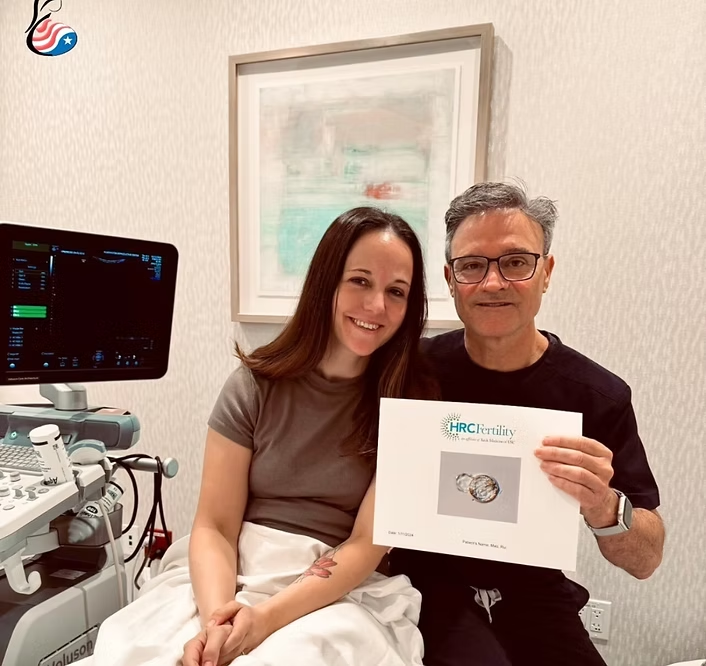
Retrieval day is a clinic procedure with its own arrival, anesthesia, transportation, and immediate-recovery instructions.
Clinic-owned medical step
Know the arrival, ride-home, and recovery plan.
The clinic—not a generic website timeline—sets trigger timing, anesthesia instructions, the procedure plan, and when symptoms require a call.
- What happens
- After final maturation and clinic confirmation, the clinic performs the outpatient retrieval and gives you discharge and warning-sign instructions.
- What you do
- Follow food, medication, arrival, and transportation instructions; bring the required support person; and ask when to call about symptoms.
- What Patriot does
- We help coordinate approved travel and practical logistics while the clinic owns the procedure, discharge plan, and medical decisions.
- What can change
- Trigger timing, follicle response, anesthesia instructions, travel, symptoms, or clinic judgment can change the retrieval plan.
After retrieval
Recover and close out
Recovery, medical follow-up, compensation and reimbursement closeout, and recordkeeping finish the cycle.
- What happens
- You follow the clinic recovery plan, watch for symptoms that require a call, complete follow-up, and confirm remaining administrative items.
- What you do
- Rest as instructed, report warning symptoms to the clinic, keep payment and reimbursement records, and wait for fresh clearance before considering another cycle.
- What Patriot does
- We support the approved non-clinical closeout, help resolve remaining logistics, and keep the appropriate contact path clear.
- What can change
- Recovery symptoms, follow-up results, outstanding receipts, payment timing, and prior-cycle response can affect closeout or future donation timing.