Intended parents
Budget, state law, provider planning
Start with the intended-parent path when the next question is cost, legal state fit, donor or embryo strategy, or choosing agency support.
Resource Center
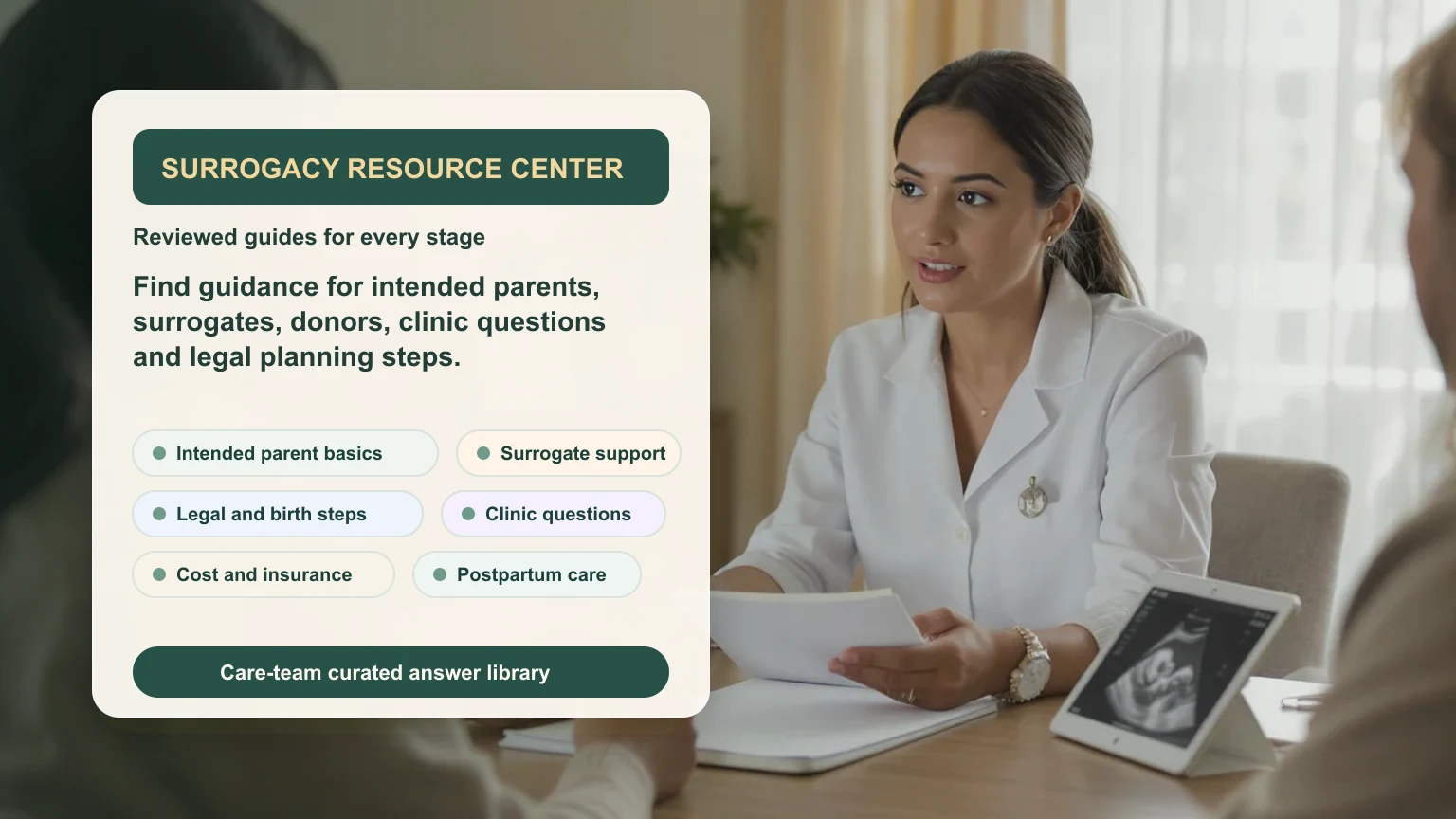
Find answers, checklists, and guidance curated by our care team.
Reviewed by the Patriot Conceptions Editorial Team
Resource guide
The Resource Center is deep. These entry points help visitors choose the right role path or tool before they browse every article.
Intended parents
Start with the intended-parent path when the next question is cost, legal state fit, donor or embryo strategy, or choosing agency support.
Surrogates
Use the surrogate path when the next question is whether you may qualify, what compensation can include, or what screening steps come next.
Egg donors
Use the donor path when compensation, covered expenses, screening, retrieval timing, or clinic logistics need to be understood before applying.
Atlas + tools
Use Atlas and planning tools when the answer depends on state law, provider access, local logistics, or a shareable worksheet.
New category
Verified guidance on TRICARE, VA fertility services, grants, operational planning, and active legislation for service members and veterans.
Free tools
Interactive tools you can save, share, and continue across devices — built for surrogates, intended parents, egg donors, and partners.
Free tool
Draft a storybook you can share with your coordinator.
Open tool →
Free tool
Create a shareable snapshot to align on expectations.
Open tool →
Free tool
Create a shareable digital bouquet with a note for milestones or encouragement.
Open tool →
Free tool
Map a phased timeline so the journey feels calmer.
Open tool →
Free tool
Build a conversation-ready list for your next call.
Open tool →
Calculator
Estimate a budget range by adjusting key cost drivers.
Open calculator →
Atlas
Compare law, provider access, and regional planning context.
Open Atlas →
 Egg Donation FAQ
 Egg donor compensation can have federal and state tax consequences. Do not rely on a short FAQ, a social media answer, or another donor's tax return as the...
 Surrogacy FAQ for Surrogates
 Surrogate compensation can have tax consequences, but there is not a single universal answer that applies to every agreement. The correct treatment depends...
Egg Donation FAQ You can usually ask questions and start preliminary review while breastfeeding, but final egg-donor cycle clearance generally waits until breastfeeding has ended, your cycle has returned, and the clinic has reviewed timing, medications, and screening.
Egg Donation FAQ You may be able to become an egg donor even if you do not live in Southern California. Location alone is not always the deciding factor. The practical...
Egg Donation FAQ Egg donors may have input into the matching process, but the level of choice depends on the program model, recipient needs, privacy setting, clinic timing,...
Egg Donation FAQ Repeat egg donation depends on health, prior cycle response, clinic policy, and donor safety. ASRM supports a prudent limit of no more than six stimulated oocyte-donation cycles because cumulative risks should be considered.
Egg Donation FAQ You may be able to donate eggs more than once, but the next cycle requires updated screening and review of your prior response, recovery, safety, timing, and total donation history.
Surrogacy FAQ for Surrogates Many surrogates can discuss using their own OB/GYN after the fertility clinic releases the pregnancy to obstetric care. The answer is not automatic, though....
 Surrogacy FAQ for Intended Parents
 International intended parents can work with Patriot Conceptions, but the journey needs more planning than a domestic timeline. The surrogacy process still...
Surrogacy FAQ for Intended Parents LGBTQ+ intended parents usually follow the same core surrogacy framework as other intended parents: clinic planning, embryo creation, surrogate matching,...
 Checklists & Templates
 A donor or surrogate application works best when it is accurate, complete, and realistic. The goal is not to make every candidate look perfect. The goal is...
Egg Donation FAQ Anonymous egg donation is not as absolute as many people imagine. ASRM donation guidance now uses the term nondirected rather than anonymous because...
Surrogacy FAQ for Intended Parents Parentage is the legal process that recognizes the intended parent or parents as the child's legal parents. In a gestational surrogacy journey, the medical...
Surrogacy FAQ for Surrogates To become a surrogate with Patriot Conceptions, start with the surrogate application and expect a step-by-step review rather than one instant approval. The...
 General Overview FAQ
 The best way to begin working with Patriot Conceptions is to choose the intake path that matches your role. Intended parents, potential surrogates, and egg...
 Finance & Insurance Guide
 Insurance planning for surrogacy and fertility care starts with the actual policy documents. A benefits summary is helpful, but it may not show every...
Surrogacy FAQ for Intended Parents Intended parents usually start the surrogacy process with a planning conversation, not a match search alone. The first goal is to clarify clinic status,...
 Legal & Policy Guide
 A pre-birth order is a court order, available in some jurisdictions, that helps establish the intended parent or parents as the legal parents before a child...
Surrogacy FAQ for Intended Parents Patriot Conceptions screens surrogates through a layered process because a gestational-carrier journey involves medical care, legal commitments, emotional...
Surrogacy FAQ for Surrogates A gestational surrogate becomes pregnant through IVF when an embryo created from intended-parent or donor gametes is transferred into her uterus after...
 Medical Safety & Protocols
 OHSS, or ovarian hyperstimulation syndrome, is a known risk of ovarian stimulation. Prevention is handled by the fertility clinic through risk assessment,...
Surrogacy FAQ for Surrogates A surrogate pregnancy can feel physically familiar if you have been pregnant before, but the journey is different because the pregnancy is part of a...
Surrogacy FAQ for Surrogates You may be able to start asking questions after giving birth, but active surrogate matching usually waits until postpartum recovery, breastfeeding status, OB history, records, and clinic clearance support another pregnancy.
Surrogacy FAQ for Surrogates For a surrogate candidate, matching time depends on screening readiness, complete records, state and clinic fit, communication preferences, intended-parent criteria, legal timing, and whether both sides feel comfortable moving forward.
Surrogacy FAQ for Surrogates Surrogacy matching timing varies because both sides need medical, legal, logistical, and communication fit. Complete records and realistic criteria can help, while narrow preferences or unresolved screening can slow the process.
Surrogacy FAQ for Intended Parents For intended parents, surrogacy timing depends on embryo status, donor needs, matching, legal review, clinic clearance, medication and transfer timing, pregnancy, delivery, and parentage steps.
Egg Donation FAQ Egg donation timing varies by application, screening, matching, legal clearance, clinic protocol, medication response, monitoring, retrieval scheduling, travel, and recovery. Plan around milestones instead of a fixed promise.
General Overview FAQ The full surrogacy process can take many months because intake, screening, matching, legal review, clinic scheduling, transfer, pregnancy, delivery, and postpartum coordination all have to align.
Surrogacy FAQ for Surrogates The amount of contact you have with intended parents depends on mutual preferences and what everyone agrees to during matching and legal planning. Some...
Surrogacy FAQ for Intended Parents Intended-parent contact with a surrogate varies by match preferences, clinic logistics, privacy expectations, pregnancy-update plans, delivery expectations,...
Surrogacy FAQ for Surrogates Surrogate compensation is a package, not a single number. Base pay, allowances, reimbursements, insurance, travel, and special-scenario terms all affect the final amount.
Finance & Insurance Guide A surrogate package combines base compensation, allowances, reimbursements, and contract-specific terms. Tax treatment is fact-specific, so keep records and ask a qualified tax professional.
Finance & Insurance Guide Surrogacy cost is built from agency services, surrogate compensation and reimbursements, clinic treatment, legal work, insurance review, escrow, travel, pregnancy expenses, birth planning, and contingencies.
Egg Donation FAQ Egg donation can affect work or school through screening appointments, monitoring visits, medication timing, retrieval day, recovery time, travel, and short-notice clinic changes.
General Overview FAQ If you are new to surrogacy, start by learning the roles, clarifying whether embryos or donor gametes are needed, reviewing cost categories, checking state-law fit, and scheduling a guided consultation.
Surrogacy FAQ for Surrogates Becoming a surrogate can be meaningful, but it is not casual. It requires screening, records, appointments, legal review, pregnancy planning, support, and...
Egg Donation FAQ Egg retrieval is usually an outpatient procedure, but discomfort and recovery vary. Some donors describe mild cramps and bloating; others need more rest....
Egg Donation FAQ Egg donors should ask how approved medical, travel, lodging, mileage, meals, childcare, lost time, and other cycle-related costs are handled before spending money or committing to a schedule.
Checklists & Templates Journey timeline templates help everyone see what must happen before the next milestone. They are not promises that every case takes the same amount of...
 Glossary & Terminology
 Legal terms in surrogacy and donor journeys should be handled carefully. A term may sound familiar but mean something specific under state law, contract...
Glossary & Terminology Medical terms in surrogacy and egg donation should be understood as clinic-owned decisions. This glossary can help you follow the conversation, but the...
Checklists & Templates Pre-journey preparation is the work that makes a surrogacy or egg donation path less confusing before matching, legal review, medications, or retrieval...
Glossary & Terminology Process terms help intended parents, surrogates, and egg donors understand who owns each step. A term can sound simple while hiding a clinic, legal, agency,...
Egg Donation FAQ Most egg donor arrangements are designed so the donor does not become a legal parent of any child conceived from the donated eggs. That result should not be...
Egg Donation FAQ Donor egg success rates are not one universal number. They depend on egg source age, embryo quality, sperm factors, clinic lab history, uterine lining,...
Finance & Insurance Guide Complete egg donation cycle costs can include donor compensation, donor recruitment or program fees, medical screening, genetic testing, psychological...
Medical Safety & Protocols Medical safety protocols in surrogacy and egg donation are not one static checklist. They can include medical screening, infectious-disease testing, genetic...
Egg Donation FAQ Egg donation risks can include medication side effects, OHSS, retrieval complications, anesthesia risks, emotional stress, time burden, and cycle cancellation. The clinic should review risks before consent.
Surrogacy FAQ for Intended Parents There is no single honest surrogacy success-rate number that applies to every intended parent. Outcomes depend on embryo quality, egg age at retrieval,...
Egg Donation FAQ Egg donor disqualification can be permanent, temporary, or clinic-specific. A person may be declined because of age, health history, genetic risk,...
Surrogacy FAQ for Surrogates To be match-ready as a surrogate, prepare pregnancy records, clarify communication preferences, confirm household support, answer screening questions honestly, and stay responsive to coordinator requests.
Medical Safety & Protocols Emergency support during surrogacy should be practical and role-specific. The plan should clarify when to call emergency services, when to contact the OB or...
Surrogacy FAQ for Surrogates Covered surrogacy expenses depend on the agency program, legal agreement, insurance review, clinic plan, and state-law requirements. Common categories can...
Egg Donation FAQ Egg donor expenses should be discussed before matching and again before cycle scheduling. A donor should not have to guess which costs are paid directly,...
Finance & Insurance Guide Family-building financing is usually assembled from several sources rather than one simple loan or insurance answer. Intended parents may combine savings,...
Surrogacy FAQ for Surrogates After a surrogate gives birth, the focus shifts to hospital coordination, parentage paperwork, postpartum medical care, expense closeout, emotional support,...
Surrogacy FAQ for Surrogates Surrogacy matching is the step where a surrogate candidate and intended parents decide whether they may be a good fit. It is not only a profile exchange....
Surrogacy FAQ for Surrogates Not having current health insurance does not automatically answer whether you can become a surrogate. It means the coverage plan needs to be reviewed before...
Surrogacy FAQ for Intended Parents Some intended parents need both a surrogate and donor eggs, donor sperm, or donor embryos. That can be completely workable, but it adds screening, legal,...
Egg Donation FAQ Egg donor age limits are strict because age affects donor screening, ovarian response, genetic counseling, recipient expectations, and program safety....
Surrogacy FAQ for Intended Parents Total surrogacy cost is built from multiple categories: agency services, surrogate compensation, legal work, clinic treatment, insurance review, escrow, travel, pregnancy expenses, birth planning, and contingency reserves.
General Overview FAQ A single agency success-rate number is not the best way to understand a surrogacy or egg donation journey. Outcomes depend on embryo quality, egg-source...
Egg Donation FAQ Egg donation medications are used to stimulate the ovaries, prevent premature ovulation, time final egg maturation, and prepare for retrieval. The exact...
Surrogacy FAQ for Surrogates Surrogate medication protocols vary by fertility clinic, transfer type, and medical history. Do not use a Resource page as a medication schedule. Your...
Surrogacy FAQ for Intended Parents A strong surrogate match depends on medical readiness, pregnancy history, support system, communication style, state and clinic fit, values alignment, and shared expectations about the journey.
General Overview FAQ Strong surrogate and egg donor candidates show medical readiness, reliability, informed consent, support, communication, realistic logistics, and respect for clinic, legal, and agency requirements.
General Overview FAQ Surrogacy and egg donation are not governed by one single rulebook. The process sits inside a layered framework that can include FDA donor eligibility and...
General Overview FAQ Patriot Conceptions supports intended parents, surrogates, and egg donors through third-party reproduction journeys. The work is practical and...
Legal & Policy Guide International intended parents using U.S. surrogacy need a legal plan that covers more than the match. The plan may involve U.S. state law, parentage...
Surrogacy FAQ for Surrogates Support during surrogacy should be practical, emotional, medical, legal, and logistical. A surrogate is not expected to manage the journey alone. The...
Egg Donation FAQ Travel and infectious-disease restrictions can affect egg donor clearance because donated eggs are regulated reproductive tissue. The clinic and program...
Surrogacy FAQ for Intended Parents The main difference between gestational and traditional surrogacy is the egg source. In gestational surrogacy, the carrier does not provide the egg. An...
Surrogacy FAQ for Intended Parents Surrogacy legality in the United States depends on state law. There is no single national rule that makes every surrogacy arrangement work the same way in...
Legal & Policy Guide The most surrogacy-friendly state is not always the state with the shortest marketing answer. A useful comparison looks at gestational-carrier law,...
Surrogacy FAQ for Intended Parents Surrogacy is usually considered when intended parents need another person to carry a pregnancy for medical, biological, or family-building reasons. The...
Egg Donation FAQ Egg donor age and health requirements are strict because donation affects more than whether someone is generous and willing. The process includes regulated...
Surrogacy FAQ for Intended Parents Choose a surrogacy agency based on process quality, transparency, screening standards, communication, legal handoff, cost planning, and whether the team can...
Egg Donation FAQ Egg donor matching time can vary from a short wait to several months because every recipient search has different criteria and every donation cycle has...
Surrogacy FAQ for Intended Parents A notarized surrogacy contract helps document that the intended parents and surrogate knowingly signed the agreement and that the signature process can be...
Egg Donation FAQ Egg donor privacy is planned through the match model, profile rules, clinic consents, legal agreement, and program policy. Some matches are anonymous or...
Surrogacy FAQ for Surrogates In gestational surrogacy, the gestational carrier does not provide the egg used to create the embryo. The embryo is created through IVF from intended-parent...
Surrogacy FAQ for Intended Parents It is understandable for intended parents to worry about whether a surrogate might want to keep the baby. In a professionally managed gestational surrogacy...
 Military & Veteran Benefits
 TRICARE generally does not cover IVF, IUI, or cryopreservation for most beneficiaries, with a narrow severe injury exception.
Military & Veteran Benefits The VA covers fertility evaluation for all Veterans in VA health care, but IVF requires service-connected infertility and surrogacy is not covered.
Military & Veteran Benefits Military families can combine nonprofit grants, military-targeted IVF support, and treatment discounts to reduce out-of-pocket costs.
Military & Veteran Benefits Military-targeted clinic discounts can reduce the cost of IVF, especially when combined with grants or medication assistance.
Military & Veteran Benefits Army Directive 2025-02 prohibits active-duty soldiers from acting as surrogates, and military families should confirm branch-specific policy before relying on assumptions.
Military & Veteran Benefits No. The VA does not authorize or fund surrogacy, even when infertility is service-connected and IVF benefits are available.
Military & Veteran Benefits PCS orders can interrupt treatment timing, referral rules, and continuity of care, so families should plan transfer logistics before major milestones.
Military & Veteran Benefits The IVF for Military Families Act, Warrior Infertility Act, and Veteran Families Health Services Act frame the main federal policy conversation in 2026.
Military & Veteran Benefits The military policy debate increasingly treats infertility as a toxic-exposure issue, especially through the logic behind the Warrior Infertility Act.
Military & Veteran Benefits Medication assistance can materially reduce treatment costs for eligible veterans, especially when paired with clinic discounts or grants.
Military & Veteran Benefits Military infertility can affect mood, relationships, readiness, and identity, so counseling and peer support should be treated as part of the care plan.
Military & Veteran Benefits Only eight military treatment facilities are listed for ART access, and families should confirm local availability before assuming care can be transferred.
Featured for tax season
The landing pages below are built to rank, to be forwarded in community threads, and to hand off to a CPA or coordinator without extra explanation.
Resource Center FAQ
It collects editorial guides, FAQ articles, calculators, and planning tools across surrogacy, egg donation, intended-parent, surrogate, and military family-building topics. Use the category filters or search to find a specific answer.
The Resource Center is the full, searchable library of editorial articles and tools. The Learn Hub organizes a curated subset of that library into role-based next-step paths. Start in the Learn Hub for guidance, then browse the Resource Center for depth.
Yes. The library is organized and reviewed by the Patriot Conceptions Editorial Team. Individual articles carry their own review dates, and tool outputs are estimates you should confirm with the relevant provider, attorney, or clinician.