



Surrogacy for single parents.
Single-parent journeys turn on three things: embryo and donor strategy, budget planning, and your support system. Plan them in that order.

The right order.
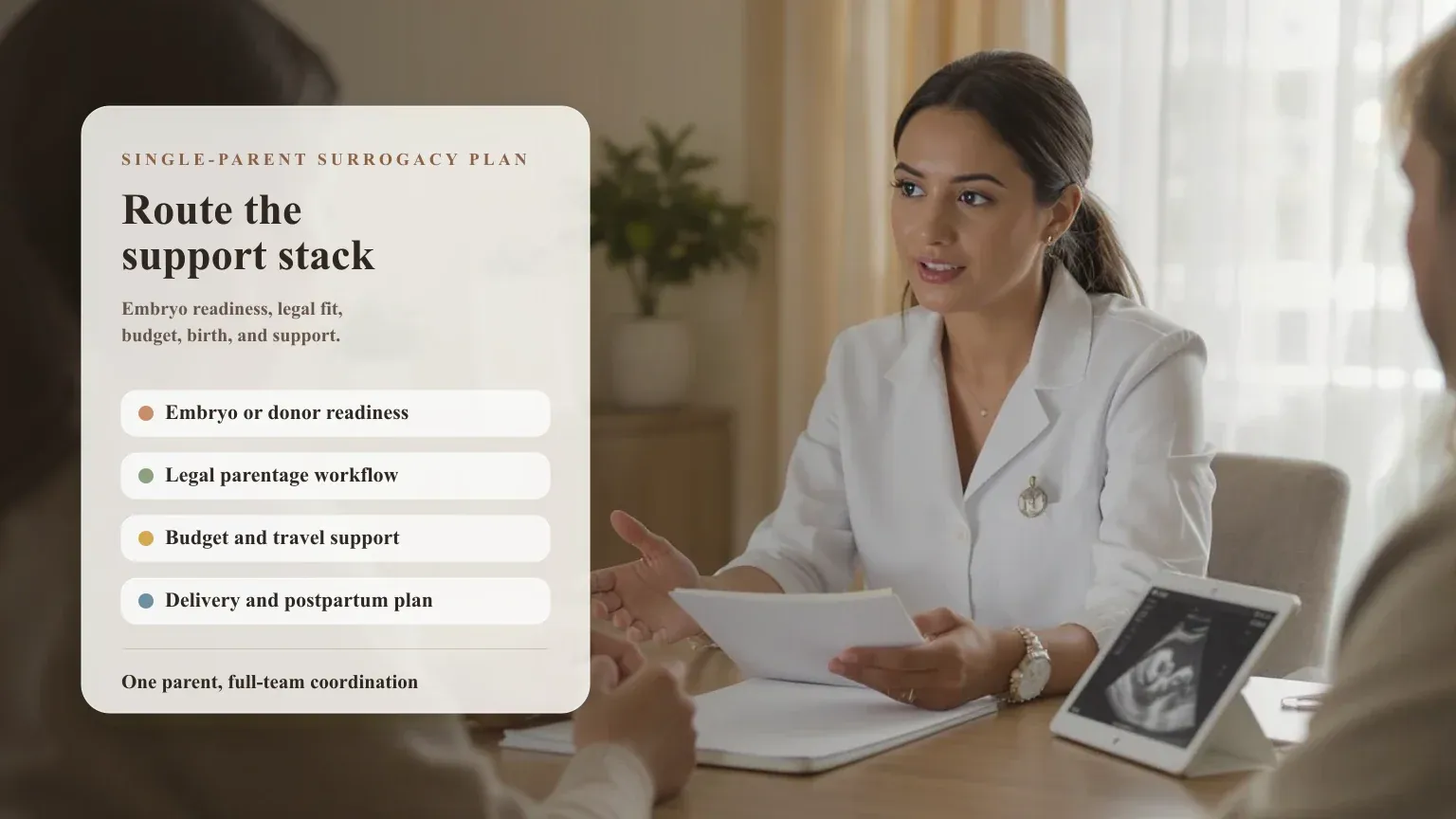
Embryo readiness, donor planning if needed, and clinic timing. The sooner these are clear, the cleaner the rest of the plan.
Parentage matters more when one parent carries the whole legal path — pick a state with a clear workflow.
Travel, postpartum support, and document coordination built in early — so the delivery stage is never carried alone.
You know the next milestone, who owns each decision, and the support plan around it. Coordination beats reassurance.
Map your support before the final stretch.
Plan help around transfer dates, appointments, delivery, and postpartum recovery. A named coordinator and a clear support plan carry the load when it matters most.
Start planning with us→Single-parent FAQ.
Can a single person use surrogacy to build a family?
Yes. Single-parent surrogacy is possible, but the plan should align embryo or donor strategy, legal parentage, budget, clinic timing, and delivery-stage support early.
Do single parents face extra legal steps?
The legal path depends on the state, marital status rules, donor or embryo facts, and parentage order workflow. Qualified reproductive counsel should review the route before transfer.
How do I plan delivery-stage support on my own?
Name practical helpers before the final stretch: travel, childcare if relevant, hospital support, document appointments, and home support after discharge.
Surrogacy for single parents, planned in order.
For any single intended parent: embryo plan, budget, legal parentage, and the support you will need around transfer and birth.
Gay single dads: use the dedicated single father guide for backup care, leave, and guardianship detail.
Updated March 23, 2026 · Reviewed by Patriot Conceptions Editorial Team
Three decisions, up front.
Confirm donor or embryo readiness before matching pressure starts.
State-law fit, parentage workflow, and delivery logistics need one plan.
Budget, travel, birth, and postpartum help should be planned before the final stretch.
The planning stack, in order.
Single-parent journeys still start with embryo readiness, donor planning if needed, and clinic timing. The faster those answers are clear, the cleaner the rest of the plan becomes.
Parentage workflow and delivery-state planning matter even more when one parent will be carrying the full post-birth legal and operational load.
Travel, postpartum support, and document coordination should be built into the plan early so the delivery stage is not carried alone at the last minute.

Build the support plan as early as the budget.
Single-parent routes are usually strongest when the support system is mapped alongside embryo strategy, legal fit, and delivery timing. That way the operational load is planned before the final stretch.
Ask the right questions first.
You should know the next milestone, the owner of each decision, and the documents needed before you get to legal or delivery-stage pressure. Good coordination matters more than vague reassurance.
Support-system planning matters early.
Single intended parents usually benefit from planning who will help during transfer travel, delivery, postpartum recovery, and home-country or home-state document coordination. The smoother that plan is, the more resilient the entire journey becomes.
Single-parent surrogacy FAQ.
Last reviewed: 2026-03-23
Next step
Build the single-parent planning stack
Start with cost and state-law fit, then move into financing, process, and a live planning conversation.